

Table of Contents
- Quick Inspection: How to Spot Cheap Plastic Sunglasses in Seconds
- Acetate vs Plastic Sunglasses: Why Material Composition Changes Everything
- Signs of High Quality Sunglasses: A 7-Point Checklist
- Are Polarized Sunglasses Worth It for Everyday Wear?
- Fit and Comfort: The Difference Between Snug and Cheap
- Repairability and Sustainable Alternatives to Throwaway Frames
- Conclusion: Buy Fewer, Better Pairs
- Frequently Asked Questions
Last Updated: September 17, 2026
Quick Inspection: How to Spot Cheap Plastic Sunglasses in Seconds
Learning how to avoid cheap looking plastic sunglasses starts with your hands, not your eyes. Before you check the price tag, pick up the frame and run two quick tests. Most flimsy pairs give themselves away in under ten seconds, and this guide from Vintishades LLC walks through the exact tells.
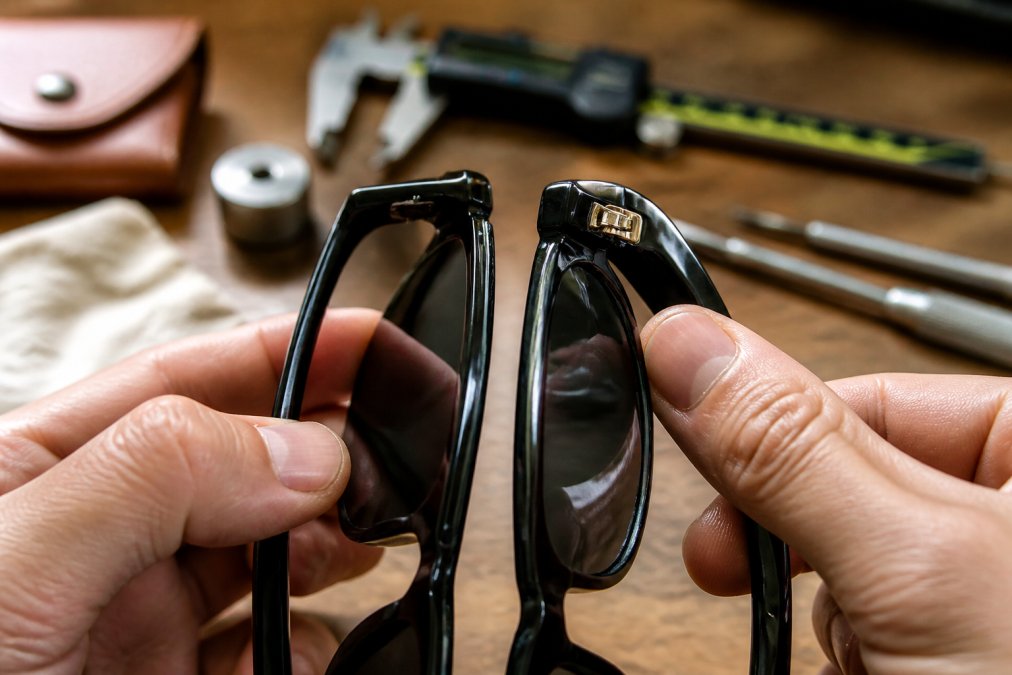
The Flex and Tap Test
Grip the frame at both temple arms and apply gentle pressure. A quality frame flexes slightly and springs back into shape. A brittle one either refuses to move or cracks under light pressure, which signals thin, low-grade plastic.
Seam Lines and Edge Finish
Run your fingertip along the inner rim and the edges of the frame. A well-finished frame feels smooth and continuous. Cheap manufacturing leaves visible seam lines, rough spots, and uneven edges where the mold halves met.
Acetate vs Plastic Sunglasses: Why Material Composition Changes Everything
The single biggest factor separating a frame that looks expensive from one that looks disposable is material composition. Acetate and injection-molded plastic are both plastics, but they behave nothing alike. Understanding this difference is central to how to avoid cheap looking plastic sunglasses.
Acetate Frames: Weight, Warmth, and Polish
Acetate is a plant-based plastic made from cotton fibers and wood pulp. It's cut and polished like wood rather than poured into a mold, which is why acetate frames have a deep, glossy finish that holds up over time.
Injection-Molded Plastic: The Real Cost of Cheap
Injection-molded frames are made by shooting molten plastic into a mold at high speed. It's fast and inexpensive, and it shows. The result is a lighter, thinner frame with a surface that scuffs easily and a finish that looks flat.
Feature |
Acetate |
Injection-Molded Plastic |
|---|---|---|
Feel |
Warm, substantial |
Slick, hollow |
Finish |
Deep, polished |
Flat, matte |
Color depth |
Layered, dimensional |
Printed, flat |
Durability |
High |
Low |
Repairable |
Often yes |
Rarely |
Signs of High Quality Sunglasses: A 7-Point Checklist
Use this checklist before you buy. It covers the physical and optical markers that separate a durable frame from a throwaway one.
- UV protection rating: Look for a UV400 label, which blocks UVA and UVB rays (the FDA)
- Polarized lenses: Check for a polarization label if you want glare reduction
- Hinge quality: Metal hinges with even resistance, not loose plastic pins
- Frame finish: Smooth, polished edges with no visible seam lines
- Weight and balance: Feels substantial but not heavy on the nose
- Lens clarity: No distortion when you look through the lens and move it
- Material marking: A stamp or label identifying the frame material
Are Polarized Sunglasses Worth It for Everyday Wear?
Polarized sunglasses are worth it for most everyday wear, especially if you drive, spend time near water, or deal with glare from roads and windshields. Polarization is a lens filter that blocks horizontally oriented light waves, which is what produces harsh glare off flat surfaces. But here's the part most guides skip: polarization is also one of the easiest places for cheap manufacturing to hide, because a bad polarizing film looks fine in a product photo and fails in your hand.
The 30-Second Polarization Test
You don't need a lab to check whether a lens is genuinely polarized. Two tests work anywhere:
- The 90-degree rotation test. Hold the sunglasses in front of a backlit LCD screen, a phone, a laptop, or a car infotainment display. Slowly rotate the frame 90 degrees. A real polarized lens will darken noticeably at one angle and clear up at the other. If the lens looks identical at every angle, the polarization is fake, weak, or absent.
- The two-pair test. If you own one pair you trust, stack the two lenses and rotate one against the other. Genuine polarized lenses will go nearly black at the cross-polarized angle. Cheap lenses with a decorative film often just dim slightly.
Why Cheap Polarization Fails
A quality polarized lens sandwiches the polarizing film inside the lens material, so it can't peel or delaminate. On inexpensive injection-molded lenses, the film is often applied as a surface layer or a sprayed coating. That's why cheap polarized lenses develop a wavy, rainbow-sheen edge, bubble at the rim, or peel off in sheets after a season of heat and sweat.
The Trade-Offs Nobody Mentions
- Screen distortion. Polarized lenses can make some LCD dashboards, phone screens, and ATM displays look dark or rainbow-patterned at certain angles. This is normal physics, not a defect.
- Not for every activity. Polarization reduces glare but does not replace UV protection. A dark polarized lens with no UV400 rating still lets UV through while your pupils dilate, the worst combination.
- Polarization is not a quality signal by itself. A flimsy injection-molded frame can carry a genuinely polarized lens, and a premium acetate frame can carry a non-polarized one. Judge the lens and the frame separately.
For festival and rave settings, polarization matters less than UV protection and frame durability. You want a pair that survives a full day of movement without slipping or cracking, and that brings us to fit.
Fit and Comfort: The Difference Between Snug and Cheap
A well-fitting frame stays put without pinching. If sunglasses slide down your nose constantly or leave red marks after an hour, the fit is wrong, and no amount of bending fixes a frame that was never built for your face shape. The good news is that fit is measurable, not subjective. Once you know the three numbers printed on almost every temple arm, you can predict comfort before you ever put the frame on.
Read the Three Numbers on the Temple
Most quality frames stamp a sizing code inside the temple arm, usually in millimeters, in the format lens width - bridge width - temple length (for example, 52-18-145). Here's what each number controls:
- Lens width (first number). Typically 46-60 mm. Too wide and the frame slides down; too narrow and the temples press into your temples.
- Bridge width (second number). Typically 14-24 mm. This is the single biggest driver of whether a frame sits on your nose or slides off it. A wide nose needs a wider bridge; a narrow bridge on a wide nose is the classic "cheap fit" complaint.
- Temple length (third number). Typically 135-150 mm. Too short and the arms dig behind your ears; too long and the frame tips forward.
The Three Contact Points, Checked Properly
Check three contact points: the bridge of your nose, the nose pads, and the temple arms behind your ears. A snug fit distributes pressure evenly across all three. A cheap frame usually presses hard on one point and floats loose on the others. Here's how to test each:
- Bridge. Look in a mirror. The frame should rest on the sides of your nose, not the top. If it's perched on the top, the bridge is too wide.
- Nose pads. On adjustable pads, you should be able to pinch them inward or outward by hand and feel them hold the new position. Pads that snap back immediately or feel like rigid plastic are molded into the frame, a hallmark of injection-molded construction.
- Temples. The arms should touch lightly behind your ears and follow the curve of your head without bowing outward. If you can slide a finger easily between the temple and your head, the frame is too wide; if the arms leave a red groove after 20 minutes, it's too narrow.
Adjustment: What Can and Can't Be Fixed
This is where material composition pays off. Acetate frames can be gently heated, usually with warm water or a hair dryer on low, and bent to fit by an optician or a careful owner. Metal frames with adjustable nose pads can be tuned with small pliers. Injection-molded plastic frames generally cannot be adjusted at all: heat them and they warp or turn glossy; bend them and they stress-crack at the hinge.
Weight and Balance
Before buying online, measure a pair you already find comfortable and compare those three numbers to the listing. If the seller doesn't publish lens, bridge, and temple measurements, that's a reason to look elsewhere, not a reason to guess.
Lightweight frames that still hold their shape give you all-day comfort without the constant readjustment. But "lightweight" and "cheap" are not the same thing: a well-made acetate or titanium frame can be light and still hold its geometry, while a thin molded frame is light because there's simply less material there to hold anything.
Repairability and Sustainable Alternatives to Throwaway Frames
Repairability is the quality signal almost nobody checks, and it's one of the clearest differences between a frame worth keeping and one headed for a landfill. Screws can be tightened or replaced. Hinges can be repaired. Acetate frames can often be reheated and adjusted by an optician.
Conclusion: Buy Fewer, Better Pairs
The challenge with sunglasses is that cheap pairs are everywhere, and they look fine until you handle them. The fix is to inspect the frame, not just the photo: flex it, tap it, check the edges, and confirm the UV rating.
Frequently Asked Questions
Are cheap plastic sunglasses okay to wear?
Cheap plastic sunglasses can block bright light, but many lack proper UV protection. Without a UV400 label, they may let UVA and UVB rays through, which can lead to eye strain and long-term damage. If you want reliable protection, look for explicit UV400 or 100% UV protection claims. The frame material matters too: flimsy injection-molded plastic cracks easily, while acetate holds shape and feels sturdier. For occasional use, a cheap pair beats nothing, but for daily wear, spending a little more on verified UV protection and durable hinges is worth it.
What makes plastic sunglasses look cheap?
Several visual and tactile cues give away low-quality plastic sunglasses. Look for visible seam lines along the frame edges, uneven color or glossy patches from injection molding, and hinges that feel loose or grind when you open them. Thin, flexible temple arms that twist easily and nose pads that are molded into the frame rather than separate pieces also signal cheap construction. A hollow sound when you tap the frame and a chemical plastic smell are additional tells. High-quality frames have smooth, polished edges, consistent color, and metal hinges that open with a solid click.
Are polarized sunglasses worth it for everyday use?
Polarized lenses cut glare from reflective surfaces like water, roads, and car hoods, which reduces eye strain and improves visual clarity. For driving, beach days, or any time you are around bright reflections, they make a noticeable difference. However, polarization is a lens feature, not a frame quality indicator. You can find polarized lenses in cheap frames and non-polarized lenses in expensive ones. If you spend long hours outdoors or drive frequently, polarized sunglasses are worth the upgrade. Just confirm the lenses also offer UV400 protection, since polarization alone does not block UV rays.
Can I tell if sunglasses are high quality just by looking at them?
You can spot several signs of high quality sunglasses with a quick visual inspection. Check the hinges: metal hinges with visible screws suggest better construction than plastic hinges molded into the frame. Run your finger along the edges; smooth, polished edges indicate acetate or higher-grade materials, while rough or sharp edges point to injection-molded plastic. Look at the lens tint for consistency, and hold the frames up to light to check for warping. Finally, examine the nose pads and temple tips. Separate, adjustable nose pads and finished temple tips are markers of a well-made frame.